
Your Car Sat All Summer in Your Venice Garage
A car left in a Venice FL garage for six months needs prep. Battery, tires, fuel, and rodents, per AAA guidance.
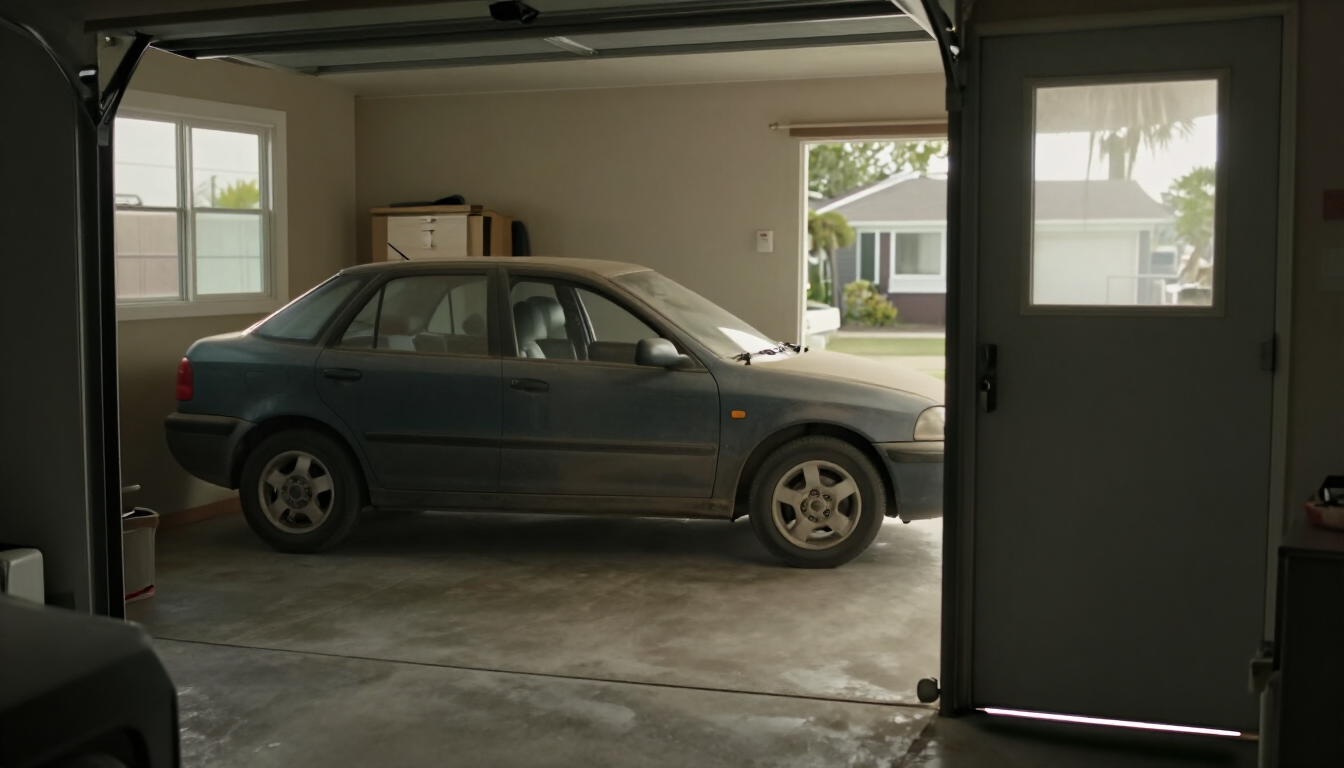
You keep a second car in the Venice garage so you do not have to rent one. You left it there in April. In November you turn the key and get nothing. The battery is flat. The tires have flat spots. There is a nest in the air box and something chewed through a wiring harness. Your first two days back go to a tow truck and a shop.
What it costs to walk away and hope
A car parked for six months in a closed Florida garage is not resting. It is sitting in heat and humidity with a slowly draining battery, soft spots forming where the tires meet concrete, fuel aging in the tank, and an engine bay that looks like shelter to a rodent.
The failures are predictable, which means they are also avoidable with a short list of tasks. Skipping the list turns a free car into a repair bill and a wasted week of your season.
Nine steps before you leave the car
AAA publishes guidance for vehicles parked for extended periods. The specifics below come from that guidance.
- 1Fill the tank and add a fuel stabilizer. A full tank limits condensation inside it. AAA recommends adding a fuel stabilizer and preservative.
- 1Drive the car 5 to 10 miles after treating the fuel. That circulates the treated fuel through the system instead of leaving it in the tank.
- 1Change the oil if it is due. Running it out gets the acids and contaminants out of the engine before months of sitting.
- 1Add 10 psi to each tire. AAA recommends the extra pressure to help prevent flat spots during storage.
- 1Do not set the parking brake. Leave an automatic in park, or a manual in first or reverse with wheel chocks. A brake left engaged for months can stick.
- 1Keep the battery maintained. Clean and tighten the terminals and keep them free of corrosion. AAA recommends a battery maintainer to hold the charge during storage.
- 1Block the rodents. AAA suggests sealing engine openings with copper wool for long term storage. The engine bay and the air intake are the places they get in. Do not leave food or paper in the car.
- 1Wash, wax, and dry the car before you go, and cover it. Store it indoors in a cool, dry, dark spot, or use a cover. AAA also suggests desiccant packs inside to control moisture, which matters in a Florida garage.
- 1Talk to your insurance agent before you change anything. AAA recommends keeping coverage active while a vehicle sits in storage. Your agent is the right person to ask about your policy, not us.
Write the whole list down before you leave. AAA makes the same point: a prep checklist is what you need in the fall to remember what you did in the spring.
What a visual property check catches that a camera does not
A camera in the garage shows you a parked car. It does not show you a tire going soft, a puddle under the engine, droppings on the floor near a wheel, or the smell of something that got in and died.
A neighbor is glad to grab your mail. Asking that neighbor to open your garage every few weeks, walk around your car, and photograph what changed is a different request, and it rarely happens on any schedule.
On a scheduled visual property check, we walk the garage along with the rest of your Venice house, look at the vehicle and the floor around it, and email you a time stamped photo report after every visit. When something looks wrong, you hear from us and you decide who to call. We check, we document, and we notify. Vehicle work goes to a licensed shop you choose.
Six months is long enough for a car to become a project. The list above takes an afternoon.
Want your garage and your car in the photo report? Book a consultation with Certified Coastal Home Watch. We serve Nokomis, Venice, Osprey, Sarasota, and Englewood.
Sources
Tips for Parking and Storing Your Car for Extended Periods, AAA https://mwg.aaa.com/via/car/parked-car-storage-tips
AAA Tips for Idle Vehicles https://southjersey.aaa.com/automotive/aaa-tips-for-idle-vehicles